0
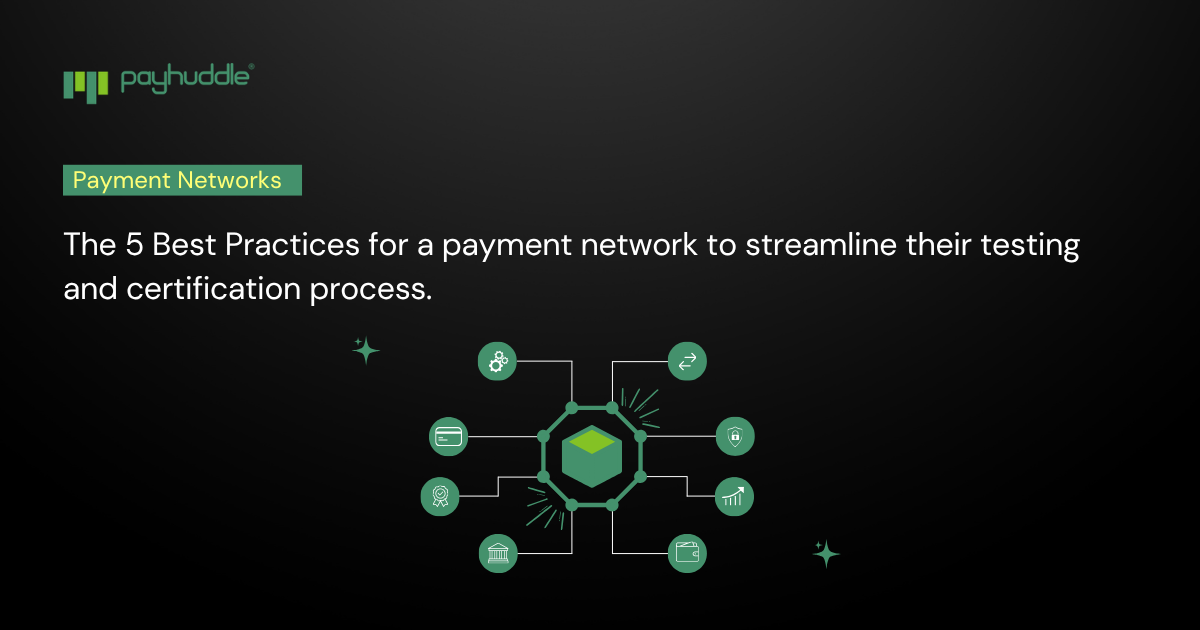
Creating a standardized testing framework should be a standard for payment networks. The framework should include multiple levels of testing to ensure that all the stakeholders in the payment ecosystem, such as acquiring banks, merchants, payment processors, and terminal vendors, can certify their terminals within the network's test framework.
As a payment network, you help merchants get their products certified so they can begin processing transactions efficiently in the field. You must be agile throughout this process to ensure success for both vendors and networks. Streamlining certification procedures and maintaining flexibility can enhance the effectiveness and reliability of payment solutions. Avoid lost time and related opportunity costs with these five best practices, which include implementing a centralized testing and certification management system.
Offer an automated test simulator for acquirers, issuers, payment processors, and merchants to debug their devices and products before booking a certification slot. It increases the likelihood of passing on the first iteration and reduces the need for repeated testing and recertification. Early detection of issues reduces the overall time and cost associated with certification.
A good payment certification platform should make simulators available on demand, so members can test at their own pace before entering the formal certification queue.
When the testers arrive at their certification slot already debugged and prepared, the process moves faster for everyone involved, and the overall volume of failed attempts drops considerably. For payment networks managing a large member base, fewer failed attempts also mean fewer rescheduled slots and a shorter backlog across the entire certification pipeline.
Build a robust certification management process to track the entire testing and certification process. The system can provide you and your members with better visibility into onboarding and testing while maintaining your regulatory requirements, live certification status, pass/fail scenarios, and completion timelines.
Build a platform that can:
Handle the entire certification management process from onboarding and testing through to LoQ. Support different versions of network specifications, so that, as a payment network, you can easily manage the certification of different versions of specifications and test plans. Simulate acquirers, issuers, networks, cards, and terminals, making it easy for members to test, debug, and certify. Handle both debug and certification scenarios within a single environment.
A centralized certification management system will help you establish a single point of control for testing and certification data, minimize the risk of errors, enhance transparency, and ensure compliance with your standards. It will help you pre-certify your merchants, implement new specifications instantly, and reduce friction in deploying new initiatives.
Moving your payment certification platform to the cloud improves efficiency. An automated payment brand certification cloud environment allows testing members across geographies to access the same certification workflows without being linked to a physical lab. Cloud payment brand certification also means regression validation checks can run continuously, finding issues before they reach the formal certification stage. Networks that have made this shift report faster onboarding cycles and a measurable reduction in the time members spend waiting for certification outcomes.
The approach also facilitates efficient data management, streamlines the certification process, and provides real-time status insights. It also helps in measuring the performance of certification projects across all payment entities that must be certified in accordance with your compliance requirements.
As a payment network, you should establish clear standards and guidelines that cover all the important aspects of payment transaction operations. It should include security protocols, transaction processing, and procedures aligned with regulatory stakeholders such as ISO, PCI, EMVCo, and NFC.
You should also provide detailed documentation for all the stakeholders involved. Partner with the payment testing labs that have the expertise and equipment to conduct evaluations of the acquirer, issuer, and processor systems and issue them a Letter of Approval (LoA).
Clear documentation reduces ambiguity at every stage of the certification process. When members know exactly what is expected before they enter a certification slot, only a few sessions fail.
Keeping documentation up to date with each specification update also reduces the support burden on your team, as members can resolve common questions independently before escalating. Standards that are well communicated upfront save more time downstream for both your team and your members.
Providing constant training and regular updates is important for maintaining certification standards and will help your vendors and merchants adapt to new technologies that you introduce. Regularly conduct webinars and one-on-one sessions with all your stakeholders to explain why they should adopt your payment standards, update them on the latest regulatory requirements, and address their concerns. It will ensure your systems remain up to date.
By continuously enabling your partners to adapt to your updated regulatory requirements, you can integrate new industry standards, streamline the certification process, and make your certification programs efficient.
Training becomes essential when specifications change. A new version of a test plan can catch team members off guard if they are not prepared.
Proactive communication, such as webinars and dedicated Q&A sessions, gives your members time to adjust before the change affects their timelines. Networks that treat training as an ongoing commitment rather than a one-time onboarding activity tend to see fewer failed certification attempts.
Collaborate with payments industry specialists and industry technical and regulatory bodies to modernize and streamline your payment network in line with industry standards.
Implement continuous monitoring of your certification products to maintain compliance and performance through regular feedback.
Industry collaboration also keeps your certification framework aligned with the broader direction of payment standards. Regulatory bodies, card schemes, and technology providers are constantly updating their requirements. Payment networks that actively participate in those conversations are better positioned to update their certification programs in advance, rather than reacting after a new standard is released.
Continuous feedback from your members is equally important. The people going through your certification process experience its friction points most directly. Building a structured channel for that feedback and acting on it signals to your members that the process is designed to work for them as much as it is designed to protect the network. Even small process improvements identified through member feedback can have an outsized effect on how quickly and smoothly certifications get completed across the board.
Partner with our team of payment solutions experts and accelerate your payment testing and certifications game. Connect with us today: info@payhuddle.com