Payment Networks
Certification Management Platforms for your Payment Network
Products
Tecto®
EMV L3TG compliant terminal testing tool
Tropo™
Card Personalization validation tool
Lithos™
Test platform for terminal, host, and network
Merchant Test Cards
Terminal test cards for debugging & User Acceptance Testing (UAT)
Betel
Terminal simulator for remote EMV terminal debugging
Stratos®
Advanced API testing platform
Rigel®
Ready-to-certify EMV Level 2 kernel
Mantle®
EMV Level 2 contact and contactless testing platform
Card Image Editor
Platform to create, validate, and update card images
TSEC Editor®
Platform to create and edit TSEC files for L3TG migration
Services
DPAS E2E Certification
Accredited D-PAS End-to-End certification provider
Discover Consulting
Accredited Discover consulting services provider
Visa CVES
Recognized Visa Chip Vendor Enabled Service provider
Outsourced Product Development
Address all stages of product lifecycle
Test Tool Development
Test tools development for the entire payment ecosystem
Testing & Certification Consulting
EMV migration consulting across payments & transit
Solutions
Acquirers / Processors
Pre-certification and faster network certification
Issuers
Lorem ipsum dolor sit amet, consectetur adipiscing elit. Dui.
Terminal Vendors
EMV Level 3 certification
Mobile Payment Apps
Blogs
Case Studies
Videos
News
Ebooks
ARTICLES
Research Papers
Who We Are
Count on us
Working with us
Careers
LIFE AT PAYHUDDLE
Bringing a POS terminal to market is not just product development. The process involves labs, terminal vendors, and payment networks operating under evolving compliance requirements.
Certifications often involve multiple entities, such as the merchant, the processor’s cert team, the terminal vendor or an integrator, and possibly network representative.
The U.S. payments market is “processor-driven.” But what does that mean, especially for something as intricate as EMV terminal certification?
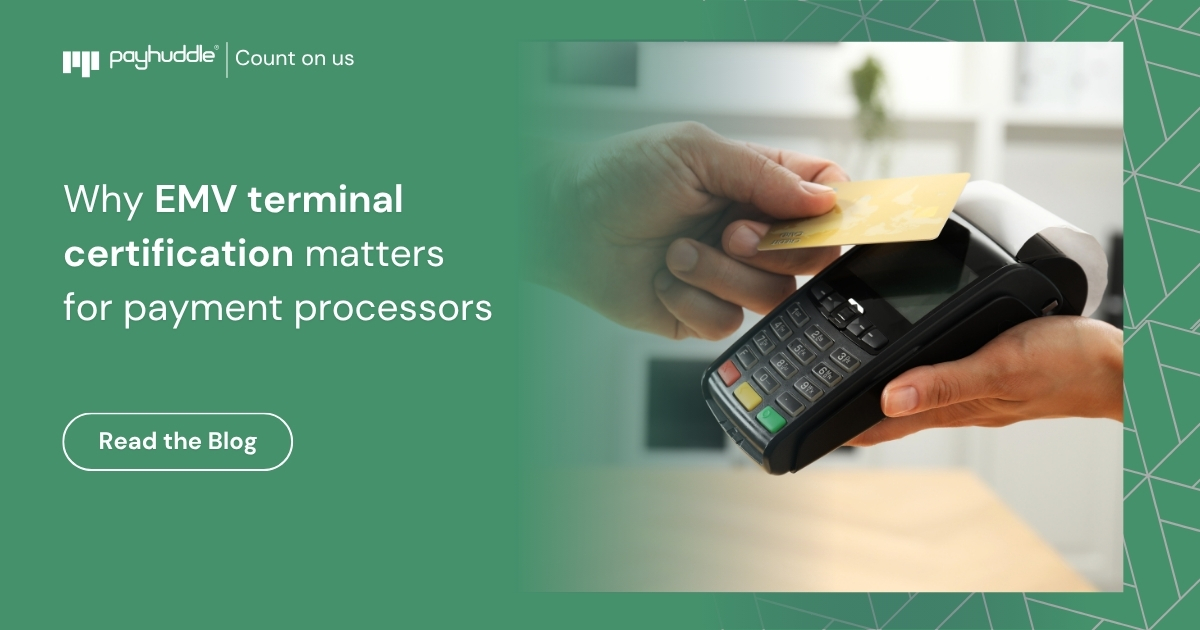
EMV terminal certification is important to payment processors since it is the key to confidence and efficiency in the payment system.
EMV Level 3 certification in the U.S. is challenging. It's a $50K-$200K, 3–6-month journey that can make or break your payment processing timeline.
Explore the role of the EMV Card Personalization Validation Process for Issuers, Personalization Bureaus, and Payment Networks and how it can be further simplified.
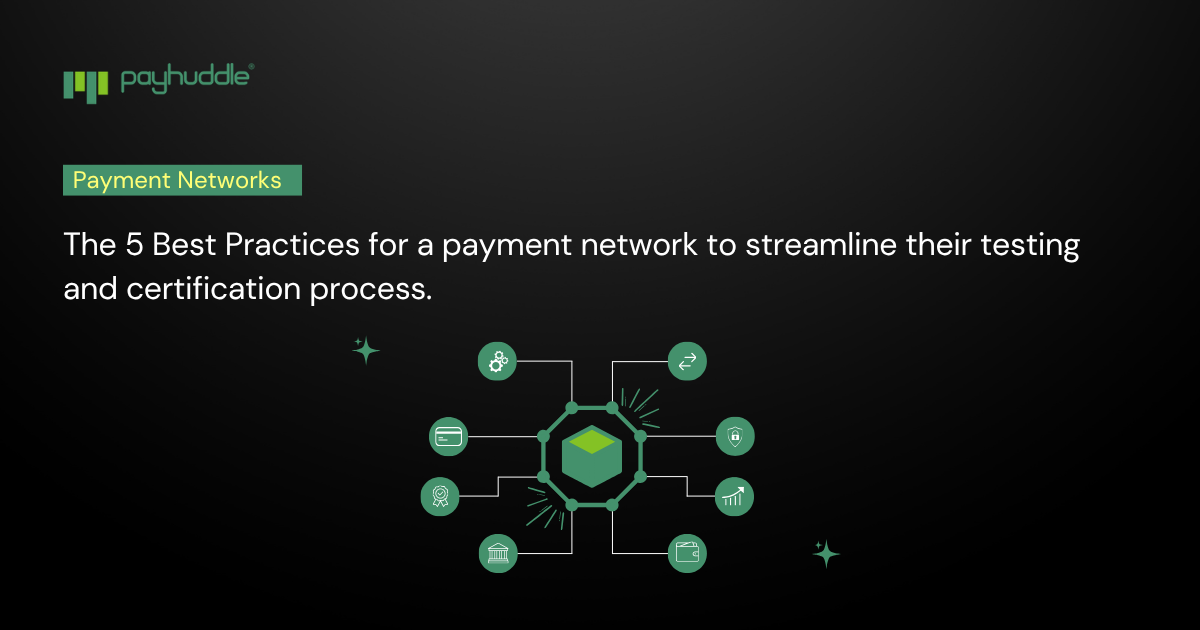
As a payment network you help merchants get their products certified so they can begin processing transactions efficiently in the field.
In this blog, we will dive deep into EMVCo L3TG, role of TSEC, challenges in building the TSEC file, use cases of the automated TSEC editor and card image generation tool
How cloud kernel is reducing the EMV L2 terminal certification costs and time. We find out by comparing the terminals with the cloud and embedded kernels.
Learn how to simplify EMV level 2 kernel certification from our subject matter expert, who has 10+ years of experience in EMV kernel certification. Read our blog now!
Managing all the payment testing such as D-PAS, Quick Chip, M/Chip, RuPay, payWave, BHIM, UPI, PayPass needs a system and process.
Read from our expert how to simplify the migration of ATM from Magstripe to EMV, which involves several stakeholders, various compliance requirements, internal infrastructure, and the end customers.
We care about your data, and we'd use cookies only to improve your experience. By using this website, you accept our use of such cookies. For more information please refer our Privacy Policy.