0
One number every testing team feels but doesn’t count: how many times a test case goes around the iteration before it finally passes.
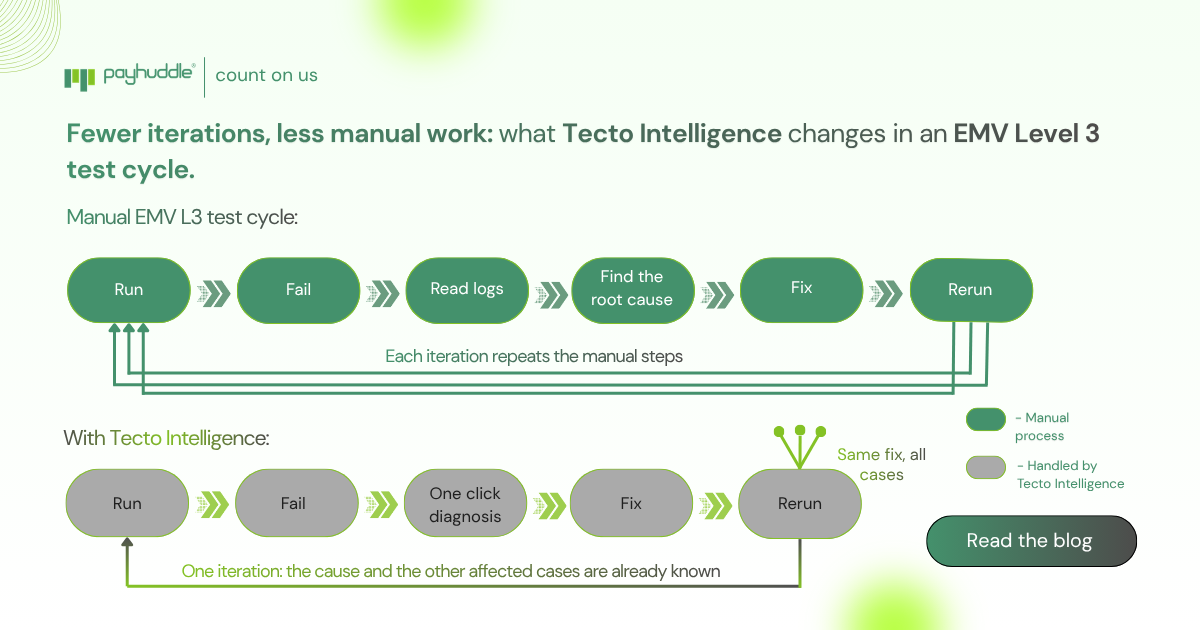
On paper, the test cycle is simple. Run the test, see the failure, fix the problem, and run it again.
In practice, nearly all the effort goes into the middle step: discovering the root cause. And plenty of repeat runs have little to do with the quality of the terminal device you’re testing. A few familiar ones:
Each of these adds an iteration, and each one brings manual work.
Someone opens the logs, searches the tag, compares values, and writes it up. It usually lands on the same few people who know EMV well, and they’re rarely available.
Tecto Intelligence starts with a detailed log analysis. It checks whether the right card and host logs are present and whether the cards used are correct.
It then validates if all the configurations matches as mandated by the payment network.
You can fix issues upfront and avoid an iteration loop to find an issue that isn’t actually there.
A setup mismatch causes failures that look real, and testers often find the exact cause only after digging through the logs.
Catching it first removes one of the most frustrating wasted iterations.
Each test case in Tecto shows its pass criteria mandated by the payment network with expected and actual values side by side.
For a failed criterion, clicking the diagnosis icon opens the diagnosis screen, showing which element is responsible, what went wrong in plain, simple English, and a recommended fix. Nobody has to check a raw hex log to find the failing tag, which means a new tester starts where a specialist would.
Cryptographic failures are a good example.
When an ARQC, a MAC, or an offline data authentication check fails, the usual routine is repeating the calculation by hand to rule out a key or certificate problem.
Deterministic intelligence in Tecto runs the calculation itself and shows the inputs, the recovered keys, and the result. You see the numbers instead of rebuilding them.
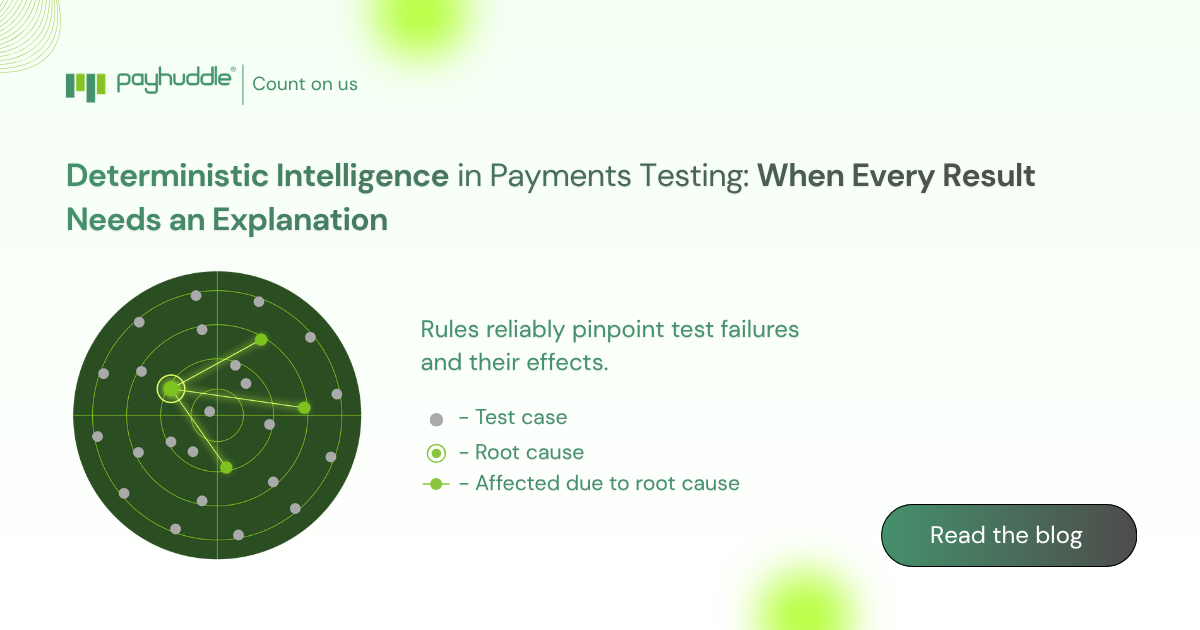
Propagation is where the savings get added.
The diagnosis lists the other test cases likely failing for the same root cause, helping you validate that one fix against all of them in a single rerun instead of discovering them over several rounds.
On a long list of test cases, that’s often the difference between one extra run and several.
Each diagnosis expands into the full chain of steps behind it: the logs read, the values compared, and the check that failed. You can review it, hand it to a test engineer.
Two testers looking at the same failure will come to the same conclusion.
You can export any diagnosis as a single report accessible in any browser and get a machine-readable copy if you want to feed it into your own systems or another tool.
The report includes the pass criteria, the issues, the recommended fixes, and the reasoning behind them.
This report is easy for a terminal device vendor, acquirer, or issuer, or even a business associate to understand.
They can see how you got there without asking. Your first message already has the evidence they have requested.
Let’s say a terminal device fails an application selection check.
In a manual cycle, someone finds the tag in the log, compares it with the terminal configuration, checks whether the card data is involved, writes to the vendor, waits, adjusts, and reruns. The check passes, but two other test cases still fail, and the same investigation starts again in the next cycle.
With the diagnosis we have in hand through intelligence, the first pass already names the responsible side, proposes the change, and lists the other test cases that should be fixed with it.
One rerun cover all of them.
It won’t fix your terminal device, card, or host. Someone still has to make the change. It doesn’t reduce the number of test cases a certification requires, and an application with a genuine fault will still fail in its first run. It removes avoidable laps and manual steps inside each lap. It’s live for the Discover payment network, with other networks to follow.
A well-defined testing process rarely makes you look at the same problem twice.
The more you can get rid of, the more time you have for decisions and fixes, and the less for reading logs.