0
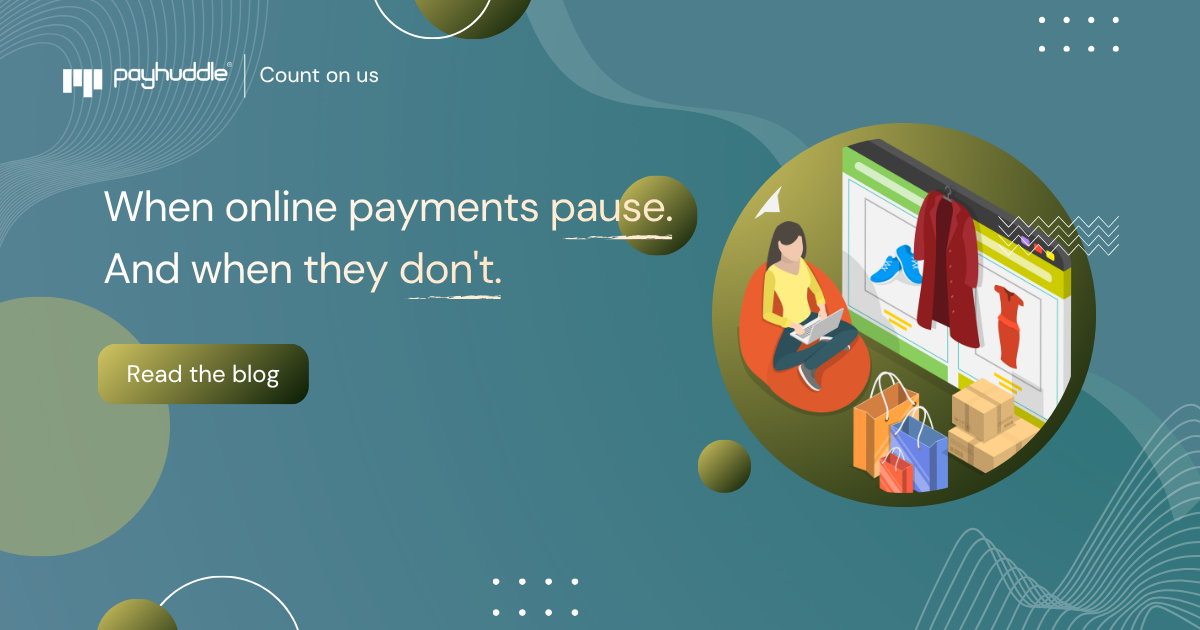
In this blog, we talk about the real-world mechanics of online payments. Not just the checkout button that the user touches. But the invisible systems that decide whether a transaction flow should proceed or pause for verification. This edition is about something most people experience every day in payments, but few truly understand.
Here is the reality: Two customers can buy the same product on the same website at the same time. And still go through two very different payment journeys.
It's 8 PM on a Saturday. A customer named Priya opens an e-commerce app. Priya adds a ₹45,000 smartphone to her cart. She enters her card details. Clicks Pay Now. Eight seconds later, the order is confirmed.
No OTP.
No prompts.
No additional steps.
Behind the scenes, the 3DS authentication system analyzed more than 100 data points:
The issuer evaluated the transaction and decided that it was low risk. The payment was approved with a frictionless authentication flow. Priya never saw the security layer.
Consider another customer - Rahul. Same website, smartphone, and purchase value. But this time everything is different:
He clicks Pay Now. Instead of instant confirmation, a prompt appears.
"Verify this payment in your bank portal." He then authenticates this transaction using an OTP or an internet banking password, and the order is confirmed.
What changed? Not the product. Not the card network. Not even the technology.
What changed was risk perception. And that is exactly what 3-D Secure does.
The difference between Priya's journey and Rahul's lies in the output of the 3DS transaction risk analysis. The system evaluates dozens of signals simultaneously, compares them against known patterns, and makes a real-time decision about whether the transaction can be approved silently or requires additional verification. The customer sees either a seamless checkout or an authentication prompt. The analysis that produced that outcome is entirely invisible.
Unlike in-store card payments, online card payments are Card-Not-Present (CNP) transactions. It means fraud risk is higher. Card-not-present authentication - 3DS addresses this by adding a verification step before the authorization request reaches the payment network.
Authentication. It is where 3-D Secure enters.
The system verifies that the person initiating the transaction is the authorized cardholder. Only after authentication is complete does the payment proceed to authorization.
The "3-D" refers to three domains involved in authentication:
Together, they create a secure environment where authentication decisions take place instantly and safely.
All of this coordination happens in milliseconds. The customer only sees the authentication result.
Understanding frictionless vs challenged 3DS is the key to understanding how modern authentication balances security and experience.
3DS 2.0 frictionless authentication made this flow possible at scale. Earlier versions of 3DS required a redirect and a static password for nearly every transaction, creating significant checkout friction and contributing to cart abandonment. 3DS 2.0 changed the model by enabling issuers to make authentication decisions based on rich transaction context rather than relying on a cardholder interaction as the default.
3DS challenge flow payments apply when the issuer's risk engine determines that the available data is not sufficient to approve the transaction silently. The challenge is not a failure of the system. It is the system working as intended, applying additional scrutiny where the risk signals warrant it.
The goal across both flows is the same: maximum security with minimum friction.
The decision about whether a transaction takes the frictionless path or the challenge path is made by the issuer's Access Control Server, based on data passed through the 3DS Server.
Risk-based authentication 3DS uses a combination of static and dynamic data points to score each transaction in real time. Static data includes card history, merchant category, and cardholder profile. Dynamic data includes device fingerprint, IP address, geolocation, and behavioral signals captured at checkout.
The richer the data, the more accurate the risk score. The more accurate the risk score, the more transactions can be approved via the frictionless flow without increasing fraud exposure. That is the commercial logic behind 3DS 2.0's data-sharing model: issuers who receive more context make better decisions, and better decisions mean fewer unnecessary challenges and fewer fraud losses.
At the center of all this is the 3DS Server, which connects all participants.
It manages:
Without the 3DS server, the entire authentication framework would fall apart.
When implemented well, 3-D Secure delivers three outcomes simultaneously:
Smart authentication is invisible. The best payment security systems are the ones customers never notice.
In digital payments, the objective is to protect the transaction without affecting the user experience. When that balance works, everyone wins.